
Digital Assistant Redesign
Project
Verizon Assistant
August 2021 – December 2021
My Role
User flows, wireframing, stakeholder alignment, documentation
The Verizon Assistant is a conversational tool that helps customers manage their Mobile or Internet accounts. Prior to this work, customers with both services had to manage separate accounts and deal with disjointed interfaces and interactions.
As part of a broader initiative to unify Verizon’s digital ecosystem, our team redesigned the Assistant to support all customer segments in one cohesive experience.
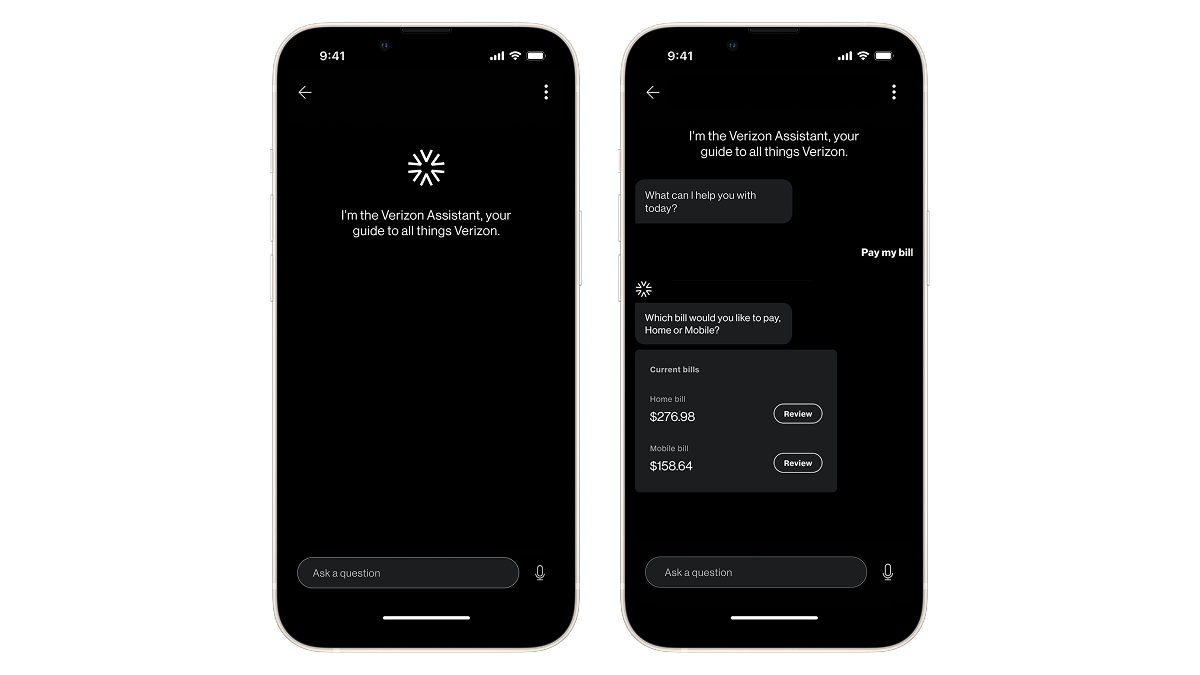
Crafting conversations
Most people used the Assistant to handle billing-related tasks, so we focused our efforts there. We mapped conversational flows for every customer type across 11 intents, resulting in over 90 flows in total.
I owned four of these intents from initial flows through wireframes. I worked with the project manager to align on business rules and technical limitations before drafting the most efficient paths from a user's first message to their ending point. While building the screens, I balanced amiable text responses with widgets that gather data and give clarity, reusing components where they fit and designing new ones when nothing did. From there, I supported a visual designer in creating higher fidelity designs and prototypes for client reviews.
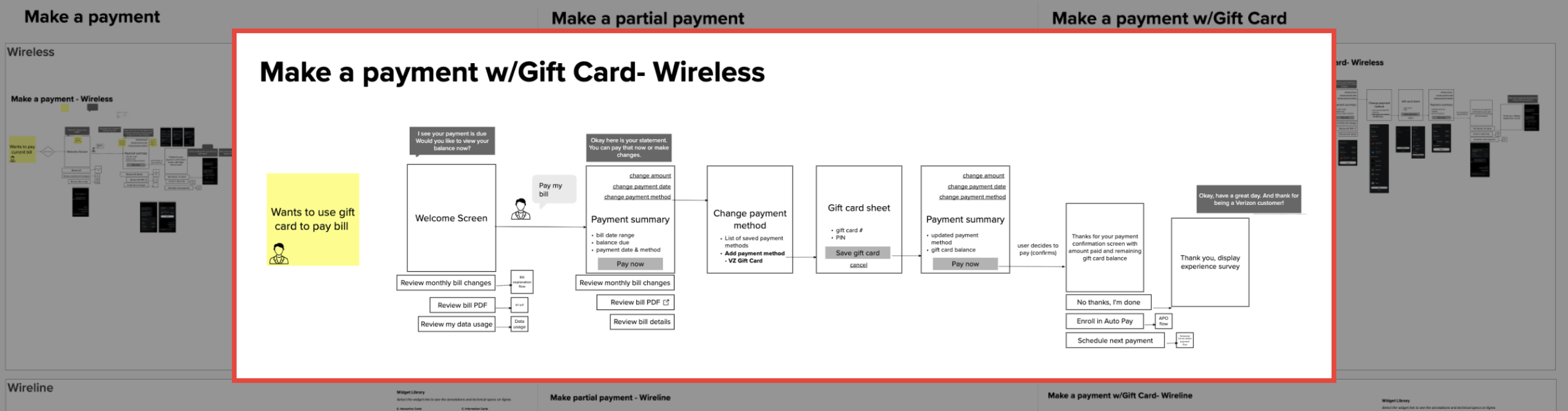
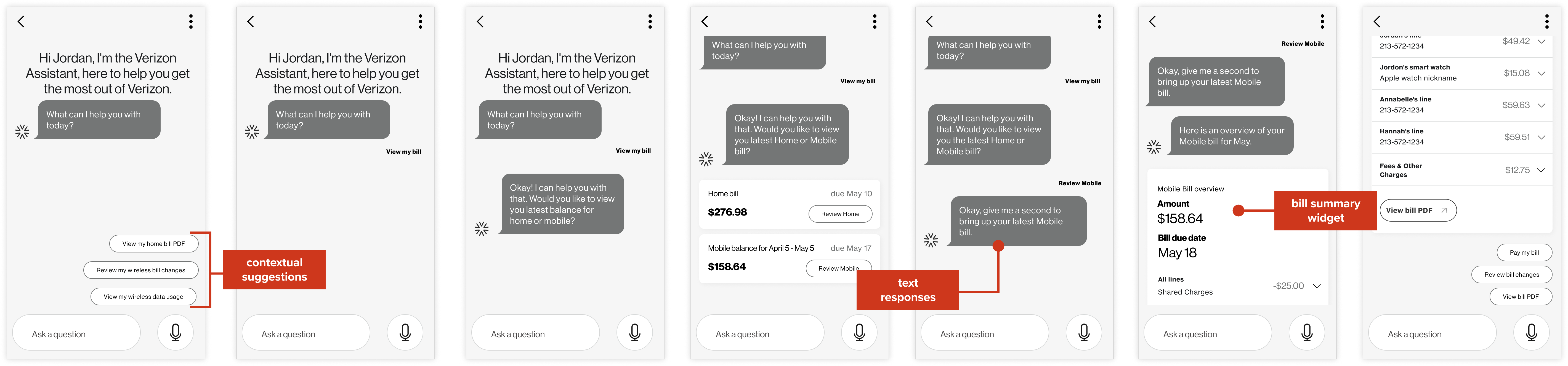
Preparing for handoff
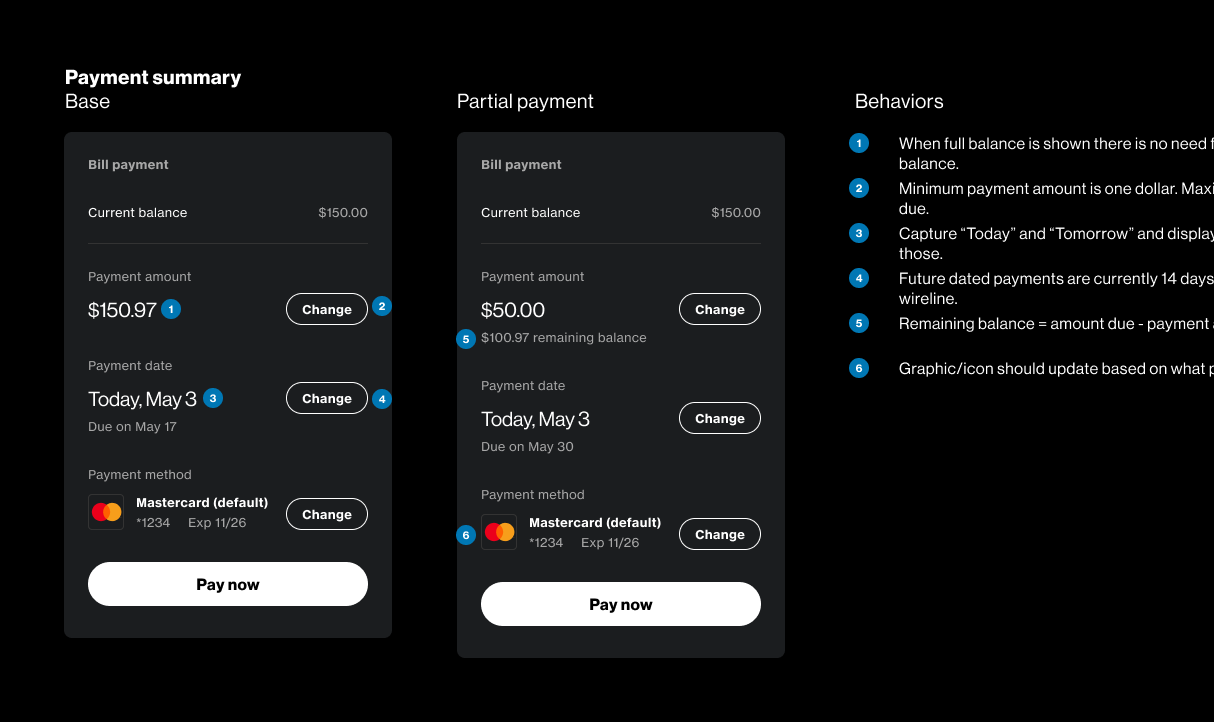
Documentation was a key part of this process, facilitating the transition from design to development. I focused on detailing the anatomy and behavior of every widget, partnering with our project manager to keep things clear and accurate.
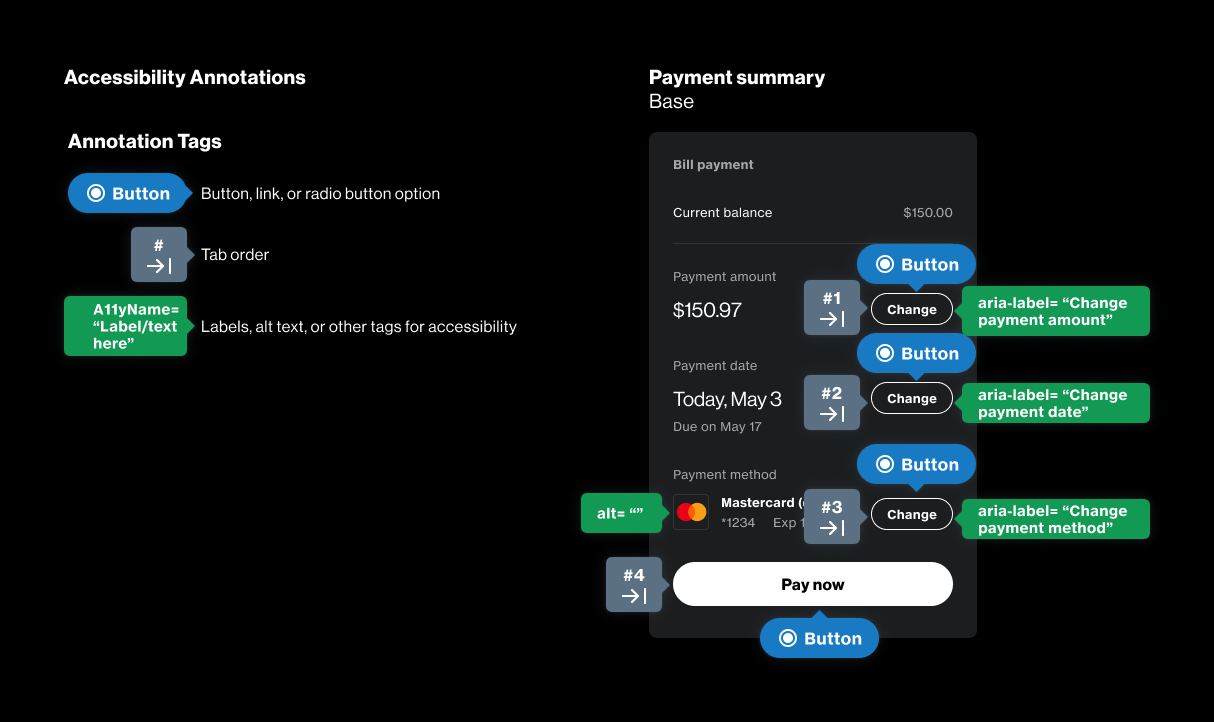
I also worked with an accessibility specialist to adapt an annotation framework to our design system, then used it to annotate the majority of flows for screen reader compatibility. I was able to share the approach with other designers before rolling off, so they could continue the effort.
The documentation efforts allowed developers to build a consistent experience, and the accessibility annotation system carried into later projects.

The redesigned Assistant launched in early 2023, giving customers across all segments a single platform to manage their services.
